
RSS

Why Insomnia During Perimenopause Can Make You Reconsider Your Home

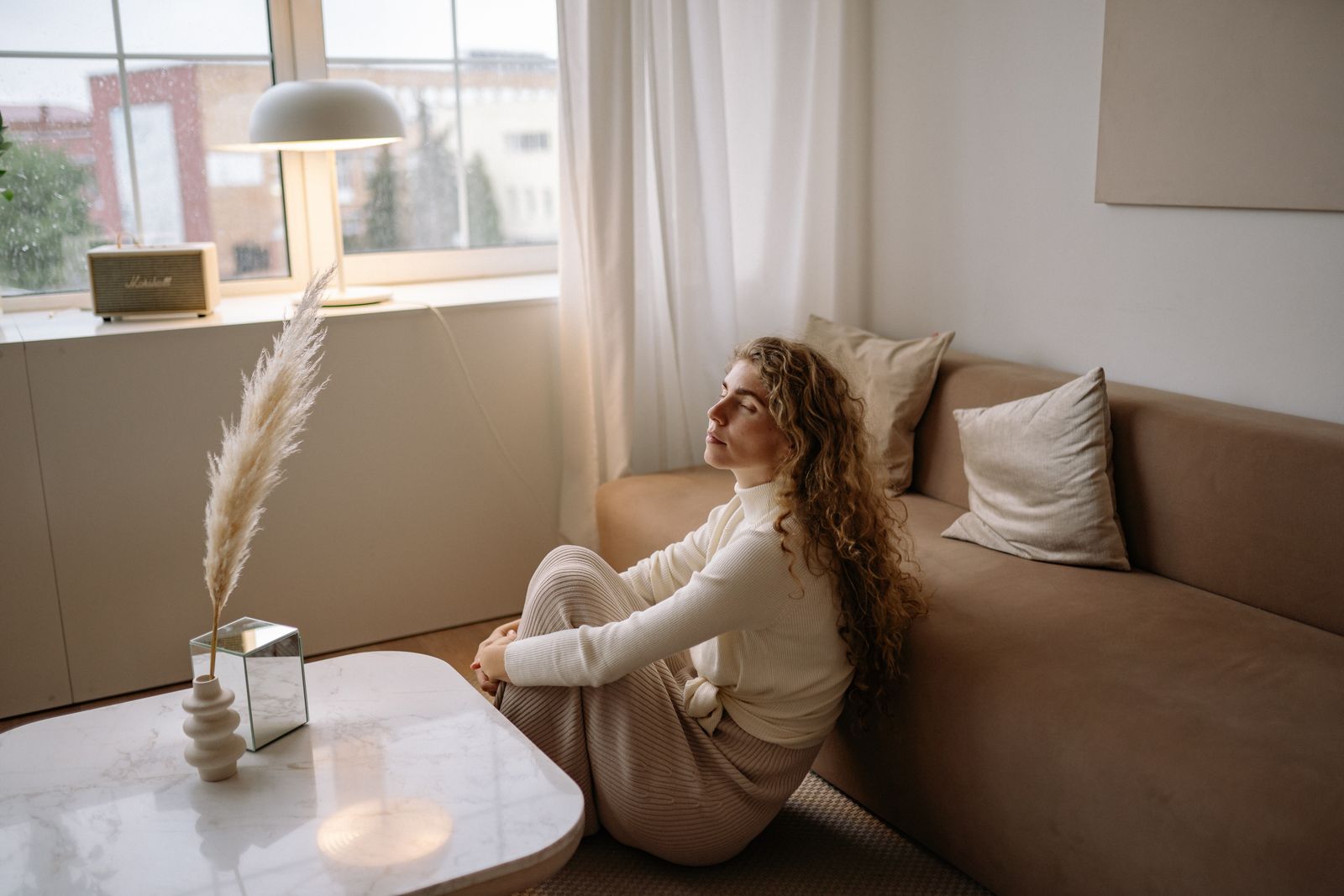
Yes, insomnia during perimenopause can change how you feel about your own home, and it happens more often than most women expect. When you are lying awake at two in the morning for the third night in a row, every small thing about your house starts to feel louder. The creak in the hallway. The neighbour's porch light through the blinds. The room that used to feel calm now feels like it is working against you.

I hear this from women in Cloverdale all the time, usually a few months into a stretch of broken sleep that has nothing to do with the house itself and everything to do with hormones. Perimenopause can turn a perfectly good bedroom into a source of frustration. Temperature swings, racing thoughts, waking up at the same time every night, none of it is caused by your home, but your home is where you feel it the most.

What I have noticed after almost twenty years of working with women in this stage of life is that insomnia rarely stays contained to sleep. It starts to colour how you see everything else. A layout that used to feel open now feels exposed. A yard you used to enjoy now feels like one more thing to manage on no sleep. This is part of why I always tell clients to slow down before making a big decision during a hard sleep stretch. It is worth asking whether the home is actually the problem, or whether it is a layout problem or a life problem that sleep deprivation is making louder than it really is.

That said, sometimes the house really is part of it. A bedroom that gets too much morning light, a home with no quiet corner to retreat to, stairs that make a 3 a.m. glass of water feel like a chore, these things matter more during perimenopause than they ever did before. I have worked with Cloverdale clients who did not realize how much their home layout was working against their sleep until they started paying attention to it on purpose.

If you are in the middle of this and wondering whether it is time to think about a different home, you are not alone, and you are not overreacting. Perimenopause brain fog already makes big decisions feel heavier, and poor sleep makes everything feel more urgent than it might actually be. I usually suggest giving it a little time and a little honesty before deciding anything. Some of this passes. Some of it does not.

I say this partly because I am navigating my own menopause journey right now, and I understand how disorienting it can feel when your body changes the way you experience your own space. It is not weakness, and it is not something to push through quietly. It is information worth paying attention to.

For women who have sat with it for a while and know the home is part of what is keeping them stuck, feeling stuck even when you have options is a real and common place to be. Knowing where you stand, the first stage of the Balance Method, often starts with naming exactly what is working and what is not. No pressure, no rush, just an honest look.

If sleepless nights have you questioning whether your Cloverdale home is still the right fit, I would be glad to talk it through with you. Bettina Reid and the team at Balance Real Estate Group have sat with plenty of women in exactly this spot, and a calm conversation is often the best place to start.

Read

What It’s Like Blending Two Households Into One Home

Blending two households into one home means merging two sets of habits, belongings and daily routines under one roof, and it is almost always harder than people expect at the start. Two people can want the exact same outcome and still find the first few months bumpy, because two households means two versions of normal, and normal takes real time to blend into one.

I see this a lot in Cloverdale and Langley, usually when an adult child moves back in with a parent, when two people combine homes later in life, or when aging parents move in with their grown kids. The story tends to start the same way. Everyone agrees the plan makes sense. The finances work. The space seems big enough. Then the moving trucks actually show up, and suddenly there are two coffee makers, two different ideas about where the towels go, and two people who both assumed the garage was theirs.

The friction rarely comes from anything big. It comes from a hundred small habits nobody thought to talk about ahead of time. One household eats dinner at five and the other at seven. One person likes a quiet house in the morning and the other turns on music the second they wake up. None of that means the move was a mistake. It just means two lives were running on their own systems for years, and now those systems have to find a way to run together.

One of the most useful things you can do before moving day is talk through logistics nobody thinks to plan for. Whose furniture stays, whose goes into storage, who handles which chores, and what happens if someone needs quiet time in a house that is now busier than before. None of these are big dramatic decisions. They are small practical ones, but skipping them is exactly why the first few weeks feel harder than anyone expected.

This is why the physical layout of the home matters just as much as the emotional side of the move. A home that technically has enough square footage can still feel impossible if there is no real separation between spaces, no place for one person to close a door and just have five minutes alone. Before combining two households, it helps to ask whether it's a layout problem or a life problem that is really at the center of the stress, because the fix for each one looks completely different.

For families in Cloverdale and Langley thinking about a multigenerational setup, the property itself usually decides how smooth this transition feels. A basement suite, a flex room with its own entrance, or even just a second living area can be the difference between blending well and feeling like you are constantly in each other's way. If you are trying to figure out whether a home can actually support two households, it is worth reading through how to know if a multigenerational home is actually the right fit before you commit to a specific property.

There is an emotional layer here too that people do not always expect. Combining households often means someone is leaving a home they have lived in for years, sometimes decades, and that loss is real even when the move itself is the right decision. It helps to actually name the emotional weight of selling a family home instead of rushing past it, because pretending it does not matter usually makes the adjustment harder, not easier.

I am Bettina Reid, and this is something my team at Balance Real Estate Group talks through often with families in Cloverdale and Langley who are combining two households into one. There is no single right way to do it, only the way that actually fits the people involved. If you are somewhere in the middle of figuring that out, the Balance Method starts with a simple first step, just getting honest about where you stand before deciding anything else.

Read

How to Tell If a Home Is Overpriced or Just Well Marketed

A home is likely overpriced, not just well marketed, if the price does not hold up once you look past the photos and compare it to what has actually sold nearby recently. Good marketing and a fair price are two completely different things, and it is easy to confuse them when a listing looks polished. Bright photos, a well staged living room, and confident wording in the description can all make an average home feel like it deserves a premium price, even when the numbers underneath do not support it.


Buyers in Cloverdale and Langley run into this constantly. A listing catches your eye, the photos feel warm and inviting, and before you have looked at anything else you are already picturing yourself living there. That feeling is not a flaw in you, it is exactly what good marketing is designed to do. The trouble starts when that feeling gets mistaken for evidence that the price itself is reasonable.


The more reliable approach is almost boring by comparison. Look at what has actually closed nearby in the last few months, not what is currently listed, since asking prices tell you what a seller hopes for, not what buyers have actually agreed to pay. Pay attention to how long similar homes have been sitting before selling. A home that has been on the market well past what is typical for the area is often a quiet signal that buyers have already decided the price is too high, even if nobody has said so publicly.


It also helps to separate the home itself from its presentation. A property that has been staged well, lit well, and photographed well can distract from real issues, an awkward layout, deferred maintenance, or a location that is less convenient than the photos suggest. None of that shows up in a well composed picture. This is part of why it matters to know what to fix before you sell and what to leave alone from the seller's side too, because the homes that sell at fair prices are usually the ones where the presentation and the substance actually match.


None of this means marketing is dishonest or that you should distrust every polished listing. It means treating the photos and the price as two separate questions. One tells you whether a home might be a good fit for how you want to live. The other requires you to look at real numbers, not just a feeling. When both line up, that is usually a strong sign you have found a fair opportunity, not just a well presented one.


I am Bettina Reid, and this is one of the most useful skills my team at Balance Real Estate Group walks buyers through in Cloverdale and Langley, comparing genuine value against confident presentation before making an offer. It protects you from paying a premium for photography instead of the home itself.


Telling the difference between overpriced and well marketed takes a little more digging than scrolling through listings, but it is not complicated once you know what to actually compare. Recent sales, real time on market, and an honest look past the staging will tell you more than any description ever will. The Balance Method Guide can help you get oriented before you start looking seriously, so you already know where you stand before the search even begins.


Read

Why Perimenopause Can Make a Cluttered Home Feel Unbearable

Yes, clutter that never used to bother you can start to feel unbearable during perimenopause, and it is usually not really about the mess itself. A drawer that has been messy for years suddenly feels unbearable to open. A closet you walked past without a second thought starts to feel like it is pressing on you every time you pass it. The clutter did not get worse overnight. Your capacity to carry it quietly did.


Hormonal changes during perimenopause affect more than temperature and sleep. They affect how your brain filters stimulation, which is part of why noise, visual mess, and general chaos can suddenly feel louder and heavier than they used to. Clutter is visual noise. When your tolerance for that kind of noise drops, clutter stops being background and starts feeling like something actively pulling at your attention all day long.


I hear this constantly from women in Cloverdale who describe feeling almost embarrassed by how much a messy counter or an overstuffed closet is bothering them lately. There is nothing to be embarrassed about. What you are noticing is real. It is not a character flaw or sudden pickiness. It is your nervous system asking for less visual load at a time when it already has plenty to process, and it often runs alongside perimenopause brain fog and real estate decisions, which can make even small piles feel harder to face than usual.


This is worth paying attention to for two reasons. Sometimes it really is just clutter, and a serious decluttering pass, room by room, brings real relief without needing to change anything else about the home. But sometimes the clutter is a symptom of something bigger, a house that has simply accumulated more than its layout was ever meant to hold, or storage that never matched how the family actually lives now. If you have decluttered before and the same overwhelmed feeling creeps back within weeks, that is often a sign the issue is a layout problem, not a life problem you can organize your way out of.


It helps to sort out which one you are actually dealing with. A home that suddenly feels louder than it used to, even when life is otherwise good, is a signal worth taking seriously rather than pushing through with another weekend of organizing bins. Sometimes the real fix is not more storage. It is less house, or a different layout that does not require constant management just to feel calm.


I am Bettina Reid, and my team at Balance Real Estate Group talks with women in Cloverdale about exactly this kind of overwhelm often. If decluttering has started to feel like a full-time unpaid job no matter how often you do it, that is worth naming instead of quietly pushing through, especially if you already recognize yourself in why some homeowners feel stuck even when they have options.


Feeling suddenly undone by clutter is not about being dramatic or too sensitive. It is information about where your energy is going right now and how much your home is asking of you to manage it. The Balance Method Guide offers a calm way to start figuring out whether the answer is decluttering, reorganizing, or something bigger, without pressure to decide anything today.


Read

How to Know When an Empty Nest Actually Feels Empty

You will usually know an empty nest actually feels empty when the quiet starts to feel heavy instead of peaceful, and that shift can take longer to arrive than people expect. Some women feel it within weeks of the last child moving out. Others feel completely fine for a year or two, busy and relieved, before the feeling finally catches up with them on an ordinary evening that suddenly feels too still.


There is no single timeline for this, and there is nothing wrong with you if your experience does not match what you expected going in. I have worked with women in Cloverdale and Langley who braced themselves for heartbreak the day the last bedroom emptied out, and instead felt mostly fine, even relieved. I have worked with just as many who assumed they would be fine and were surprised months later by how differently the house felt to move through.


The signs are usually small before they are obvious. A kitchen that used to feel like the center of the house starts to feel oversized for the amount of cooking actually happening in it. Bedrooms that once needed constant tidying sit untouched, doors closed, for weeks at a time. You might notice yourself avoiding certain rooms altogether, or find that the house feels loud in a different way now, not from noise but from how much unused space there is to fill with your own thoughts.


None of this means you did something wrong, and it does not mean you have to make a decision right away. Plenty of women in Cloverdale and Langley live comfortably in a larger, quieter home for years after the kids are gone, and that is a completely valid choice. What matters is noticing how the space actually feels to you now, rather than how you assumed it would feel, or how you think you are supposed to feel about it.


If the quiet has started to feel like too much house rather than too much peace, that is worth paying attention to. It does not mean loving your home less. It often means loving the next chapter enough to ask whether this particular house is still the right fit for a life problem, not just a layout problem. Sometimes that means using the space differently before deciding anything bigger.


I am Bettina Reid with Balance Real Estate Group, and this is one of the most common conversations my team has with women across Cloverdale and Langley once the house empties out. I have written before about the empty nest and what it does to your sense of home, and one thing holds true every time. There is no right amount of time to sit with the question before it counts as real.


An empty nest is not something you are supposed to feel a certain way about on a schedule. However long it takes to notice whether the quiet feels peaceful or heavy, that noticing is the useful part. The Balance Method Guide offers a gentle way to start exploring what would actually make the space feel right again, whether that means changing how you use it or changing where you live.


Read

Why Perimenopause Fatigue Changes What You Want From a Home

Yes, the kind of tired that comes with perimenopause really can change what you want from a house, not just how you feel while you are in it. This is not the tired that a good night of sleep fixes. It sits in your shoulders and your patience and the way you look at a staircase you used to take without thinking. When that kind of fatigue moves in, a home that once felt full of possibility can start to feel like a list of chores you no longer have the energy for.

I see this often with women in Cloverdale who tell me the same thing in different words. The garden they used to love now feels like an obligation. The extra bedroom they meant to finish decorating has become a place to close the door on. None of this means they have stopped caring about their home. It means their energy is going somewhere else right now, and the house has not caught up to that shift yet.

Perimenopause fatigue is real, and it is not the same as being busy or tired from a hard week. Hormonal changes affect sleep quality, muscle recovery, and even how your body processes stress, and all three of those shape how much a home asks of you every single day. This shows up often in older Cloverdale homes built for larger, busier households years ago. A three-level house that felt manageable five years ago can start to feel like a workout you did not sign up for. A big yard that once felt like a gift can start to feel like a second job.

This is usually the moment women start asking themselves quieter questions. Not whether they hate their house, but why everything in it takes more out of them than it used to. That is worth sitting with instead of pushing past. If you are already wondering whether it is a layout problem or a life problem, this kind of exhaustion is often the first clue pointing you toward an answer.

What tends to help is separating what is fixable from what is not. Sometimes the fatigue is pointing at specific things, a laundry room in the basement, stairs that never bothered you before, a kitchen laid out for a family that has grown and scattered. Small changes can really help there. But sometimes no amount of reorganizing fixes the deeper mismatch, a home that was built for a different amount of energy than you have to give it these days. Knowing the difference matters, because one path is a weekend project and the other is a much bigger conversation with yourself.

It also helps to notice when you are the one apologizing for needing less. Women in Cloverdale often tell me they feel guilty even considering a smaller or simpler home, as if wanting more ease somehow means giving up. It does not. Wanting a home that gives you energy back instead of draining it is not a smaller life. It is often the beginning of a fuller one, once the house stops taking so much just to keep it running. If this pull keeps showing up, it might be worth asking how do you know if it's time to start thinking about moving, even before you are ready to answer that fully.

I am Bettina Reid, and my team at Balance Real Estate Group talks with women across Cloverdale through exactly this kind of shift all the time. If the fatigue you are feeling has also come with a foggier head or less patience for big decisions, it is worth reading about perimenopause brain fog and real estate decisions, because the two often show up together and neither one means your judgment cannot be trusted.

Feeling too tired for your own home is not a small thing to push through and ignore. It is information about how well the space you live in actually fits the life you are living now. If that tiredness keeps showing up no matter how much you rest, it might be less about you and more about the house asking more of you than it should. The Balance Method Guide walks through a gentle first step for figuring that out, without any pressure to decide anything today.

Read

How Do You Know You’ve Actually Outgrown Your Home in Langley or Cloverdale?

You have actually outgrown your home in Langley or Cloverdale when the small daily friction stops being occasional and starts being constant, not just a busy week here and there, but every single week. One kid doing homework at the kitchen table while dinner is being made around them. A shared bathroom in the morning that turns into a genuine bottleneck. A garage or entryway that never has enough room for everyone's coats and shoes and gear no matter how many times you reorganize it. If that sounds familiar, you are probably not imagining it.

The tricky part is telling the difference between a home you have outgrown and a home that just feels cramped because life got busy for a stretch. Families in Langley and Cloverdale ask me this constantly, especially when a growth spurt hits, a hobby takes over a room, or a new baby arrives and every room in the house shifts by one. Should you downsize, upsize, or stay put walks through this question in more detail, but the short version is that a house you have outgrown usually shows up as friction that does not go away even after you clean up, reorganize, or wait for a busy season to pass.

One helpful test is to picture your daily routine on an ordinary Tuesday, not a holiday or a birthday, just a regular day. If getting everyone fed, dressed, and out the door involves working around the house instead of the house working for you, that is a real signal. A kitchen too small for the number of people using it, bedrooms that force siblings to share past the age when they wanted to, a single bathroom for a family of five, these are not small annoyances. They are daily costs that add up over months and years, even if no single day feels like a crisis.

Langley in particular has become a strong option for growing families who need more room without leaving the community they already know. The mix of newer construction and established neighbourhoods means there is usually a path to more space that does not mean starting over somewhere unfamiliar. What makes Langley a good fit for women right-sizing in midlife focuses on a different stage of life, but the same idea applies here in reverse: Langley has room to grow into, not just room to settle into later.

Age plays a role too, and it changes the equation over time even in a house that once felt like plenty of room. Siblings who happily shared a bedroom at six and eight years old often need real separation by the time they are eleven and thirteen, and a home office that worked fine when it was occasional now needs to hold up to daily use. None of that means the original home was a bad choice. It means families change shape as they grow, and a house that fit perfectly at one stage can really stop fitting a few years later without anyone doing anything wrong. Cloverdale and Langley both have a strong mix of established neighbourhoods and newer construction, which gives growing families more than one path to more space, whether that means a bigger lot, a different layout, or simply a home built with a few more years of room to grow into from the start.

I'm Bettina Reid, and my team at Balance Real Estate Group works with growing families across Langley and Cloverdale who are in exactly this spot, somewhere between "we're managing" and "we need more room." It is a different feeling than the one that comes later with the empty nest, but it deserves just as much thought, not less, because a home that is too small shapes your daily life just as much as one that has gotten too big. If your Tuesdays feel like they are working around your house instead of with it, the Balance Method Guide is a good place to start figuring out what more room could actually look like for your family, and there is no need to have it all mapped out before you start looking. A bigger home does not have to mean starting over from scratch, and the right layout can solve more of the daily friction than most families expect.

Read

What If You Move and Regret It? How to Actually Think That Through

What if you move and regret it. That question stops more people than almost anything else, and thinking it through in a real way is the only way to actually get past it. Regret is not really about the moving truck or the paperwork. It is about the fear that you will give up something that mattered, a garden you planted, a neighbourhood you know, a sense of home you built over years, and not get anything back that feels as good.

The truth is that this fear is worth taking seriously instead of pushing past. Ignoring it does not make it go away, it just means it shows up later, usually after the moving boxes are unpacked. A better approach is to get specific. What exactly are you afraid of losing? Is it the house itself, or is it the version of your life that happened to take place inside it? Those are different things, and separating them usually makes the decision clearer. A layout problem or a life problem is a useful way to sort through this, because sometimes what feels like fear of regret is really just fear of change, and those two things deserve different answers.

It also helps to look squarely at the cost of not moving. Staying can feel safer because nothing changes, but "safe" and "working well" are not always the same thing. If a home has quietly stopped fitting your life and you stay anyway just to avoid the risk of regret, that avoidance has a cost too, even if it is a quieter one. Why "we're fine for now" can quietly cost you speaks directly to this. The regret you are trying to avoid by staying put can end up happening anyway, just more slowly and less visibly.

One thing that really helps is talking to people who have already made a similar move, not the ones who regret it, but the ones who do not. Most of the women I have worked with in Cloverdale, Langley, South Surrey, and White Rock who were most afraid of regret beforehand are the ones who, a year later, wonder why they waited as long as they did. That does not mean regret never happens. It means it happens far less often than the fear predicts, especially when the move is made with real thought instead of in a rush. How do you know if it's time to start thinking about moving is a good place to start if you are still in the stage of turning the question over in your mind rather than acting on it.

It also helps to notice that staying put is a decision too, even though it rarely feels like one in the moment. Choosing not to move does not put your life on pause. Time still passes, the house still ages, and the reasons you were considering a move in the first place usually do not disappear just because you decided to wait. There is no version of this where you get to make a completely risk-free choice. There is only the version where you think it through carefully with real information, and the version where you avoid thinking about it at all because the fear feels too big to face head on. The first version leads to fewer regrets, even when the outcome is not perfect, simply because you made the decision instead of letting the decision happen to you.

I'm Bettina Reid with Balance Real Estate Group, and I would rather talk a client out of moving too soon than watch them move into a decision they are not ready for. If the fear of regret is the main thing holding you back right now, that fear deserves a real conversation, not just a quick answer. The Balance Method Guide was built for exactly this stage, where you are not sure yet and just want to think things through before you decide anything. Fear of regret is not a reason to stay stuck, it is simply a sign that the decision matters to you, and that is worth taking seriously rather than pushing away. Most women who move through this fear with real thought behind them, instead of rushing past it or ignoring it, come out the other side glad they took it seriously.

Read

Why Cloverdale’s Walkable Pockets Are Drawing Empty Nesters Who Want Community, Not Isolation

Cloverdale's walkable pockets are drawing empty nesters because a big, quiet house on its own can start to feel isolating once the kids are gone, and a short walk to a coffee shop or a neighbour's front porch suddenly matters more than an extra bedroom nobody uses. It is not that these women want less house because they are settling for something smaller. Many of them want more life, and that turns out to look different than the home they raised their kids in.

I see this pattern constantly working with women across Cloverdale. The house that made sense for years, the one with the big yard and the extra rooms and the long driveway, starts to feel like it takes more from you than it gives once the people who filled it have moved on. Why the empty nest hits differently than you expected is something I wrote about because so many women describe the same surprise: they thought they would feel relief, and instead they felt a strange kind of quiet that made the house feel too big and too far from everything at the same time.

What tends to draw women toward Cloverdale's more walkable neighbourhoods is not really about downsizing the square footage. It is about right-sizing the whole picture, including how much time you spend driving to see people versus how much time you spend actually seeing them. A short walk to get a coffee with a friend, a front porch close enough to the sidewalk that neighbours actually stop and talk, a park within reach without needing the car, these things add up to a different kind of daily life. If you are still working out what that really means for you, what right-sizing actually means is worth a read, because it is rarely just about a smaller number of square feet.

There is also something to be said for staying close to the community you already know. Cloverdale has grown a lot over the years, but its older, walkable pockets still have that neighbourhood feel where people recognize each other and check in without being asked. For women moving through this stage of life, that kind of low-key connection matters more than square footage or a formal dining room that only gets used twice a year. You are not behind if this is only occurring to you now. As I have said before, you're not behind, you're just in a different season, and Cloverdale has plenty of homes built for exactly this one.

There is a practical side to this too. When most of what you need is a short walk away, your daily errands stop eating up your whole afternoon, and the small trips that used to mean getting in the car become part of a walk you were probably going to take anyway. Grandkids and adult children still visit just fine in a smaller home close to the center of things, sometimes more often, because there is less to maintain and more reason to be out and about together when they come. A smaller footprint does not have to mean a smaller life. For a lot of women, it ends up meaning the opposite, because the energy that used to go into upkeep and driving gets freed up for the things that actually matter.

I am Bettina Reid with Balance Real Estate Group, and Cloverdale is where my team spends most of our time, which means we know these walkable pockets block by block, not just from a listing sheet. We know which streets are a genuine walk to the shops and which ones only look that way on a map. If a smaller home closer to the center of things has been on your mind, even quietly, the Balance Method Guide is a calm place to start figuring out what that could actually look like for you. There is no deadline attached to any of this, and no rule that says you have to know exactly what you want before you start asking the question. Plenty of women spend months just noticing what they like about certain streets or certain homes before they ever put their own house on the market, and that noticing is a real part of the process, not a delay of it.

Read

Why Perimenopause Makes You Suddenly Notice Every Flaw in Your Home

Yes, perimenopause really can make you notice every flaw in your home that you walked right past for years without a second glance. The chipped tile by the back door, the hallway that never gets quite enough light, the stairs that felt fine last spring and feel steep this year, none of that changed overnight. Your body did. When your hormones start shifting, your senses shift along with them, and a home you once found comfortable can start to feel like it is working against you instead of for you.

I hear this from women in Cloverdale and Langley all the time. They tell me the house is the same house it has always been, but something about living in it feels different now. Sounds feel louder. Clutter feels heavier. A room that used to feel cozy can suddenly feel cramped, and a kitchen that used to feel busy and full of life can start to feel like it takes more energy than it gives back. This is not you imagining things. Perimenopause affects sleep, temperature, mood, and focus, and all four of those shape how a home actually feels to live in from one day to the next.

What tends to happen next is a kind of quiet frustration. You cannot always point to one clear thing that is wrong, so you start picking at small details instead: a paint color, a piece of furniture, a room that never got finished the way you meant it to. Sometimes that frustration really is about the house. But often it is about something bigger, a sense that the home is not keeping up with where you are in your life right now. Is It Harder to Make Housing Decisions During Perimenopause? is a question I get asked in some form almost every week, and the honest answer is that yes, it usually is, at least for a while.

Sometimes the flaws you keep noticing are not really flaws at all. They are signals. A layout that worked well when the kids were young might not fit how you actually use the space now. A big kitchen built for a busy family can start to feel oversized once most of the cooking is just for one or two people. It helps to stop and ask whether what is bothering you is a layout problem or a life problem, because the answer changes what you actually do about it. Sometimes a few changes inside the home are enough. Sometimes no amount of updating fixes a house that was simply built for a different season of your life.

It also helps to separate what is temporary from what is not. Not every flaw needs fixing, and not every small project solves the deeper thing underneath it. A fresh coat of paint might really help a room feel better without meaning anything is fundamentally wrong with the house. But if you find yourself wanting to update room after room and nothing quite settles the restlessness, that is usually a sign the frustration is not really about paint colors or light fixtures at all. It is about whether the whole home, not just one room of it, still makes sense for how you live now. Temperature is a good example. If you are managing hot flashes and the bedroom has always run warm, or the stairs that never bothered you before now leave you winded halfway up, those are not small things to push through and ignore. They are your body telling you something real about how this particular house fits this particular stretch of your life.

I am Bettina Reid, and this is exactly the kind of thing my team at Balance Real Estate Group talks through with women in Cloverdale and Langley every week. Perimenopause has a way of turning up the volume on feelings you may have been carrying quietly for a long time. If your focus feels foggier than it used to and you are second-guessing yourself more than normal, it is worth reading about brain fog and your next real estate decision, because it explains why big choices about your home can feel harder to trust right now, even when your instincts underneath are still good.

Noticing every flaw in your home does not mean something is broken in you or in the house. It usually means you are paying closer attention to your own life than you have in years, and your home is simply the place that attention keeps landing. If that noticing keeps happening week after week, it might be worth a real look at whether the house still fits, not just how it looks but how it feels to actually live in every day. The Balance Method Guide walks through exactly that first step, gently and without any pressure to decide anything right away.

Read

What Happens to a Home After the Kids Move Out?

What usually happens is that the home keeps running the way it always did, even though the reason for most of its rooms and its routines is gone. Bedrooms stay set up the way they were. Grocery lists stay sized for a bigger household out of habit. The house does not update itself just because your family did.

This is one of the quieter parts of the empty nest that nobody warns you about. It is not just the silence in the hallway. It is realizing months or years later that you are still living inside a home built around a stage of life that ended a while ago. The empty nest and what it does to your sense of home is a bigger shift than most women expect going in.

Some women in Cloverdale respond by finally taking over the space, turning a bedroom into the office or studio they never had room for, or simplifying a kitchen that used to run like a small restaurant three times a day. Others find that no amount of repurposing rooms changes how the whole house feels, too big, too quiet, or just built for a different chapter than the one they are in now.

There is often a strange kind of guilt attached to wanting something different once the kids are gone, as if the empty rooms should be enough reason to feel grateful and stay put. You're not behind, you're just in a different season, and wanting your home to match that season is not ungrateful. It is honest.

This is also when a lot of women start noticing that the layout itself was never really designed with them in mind, the primary bedroom on a different level than everything else, a kitchen built for feeding a crowd instead of one or two people, stairs that felt fine a decade ago and do not anymore. A layout problem versus a life problem is worth sorting out before you assume the fix is bigger than it actually is.

For some, the answer is staying and reshaping the home around this new stage. For others, it is recognizing that a smaller or differently laid out home in Cloverdale would actually give them more freedom, not less. Both are valid, and neither one has to be decided overnight.

What matters most is not guessing at the answer alone. Understanding what your current home is worth, what is realistically available, and what your day-to-day would look like in a different space gives you something solid to decide from instead of a vague feeling that something should change. That is exactly what the Balance Method walks you through.

I am Bettina Reid with Balance Real Estate Group, and I have spent two decades helping women in Cloverdale figure out what comes next once the house stops needing to be what it used to be. If your home feels like it is still set up for a family that has moved on, reach out and let's talk through what your options actually look like.

Read

What Should You Ask a Realtor Before You List Your Home?

The most useful question is not about price. It is asking your realtor how they plan to prepare your home, price it honestly, and support you through the parts of selling that have nothing to do with paperwork. Most sellers only ask about commission and timeline, and both matter, but they miss the questions that actually predict whether the whole process feels calm or chaotic.

Start by asking what needs fixing before your home goes on the market, and just as important, what does not need fixing. What to fix before you sell, and what to leave alone is one of the most expensive blind spots sellers have, and a good realtor should be able to answer it specifically for your home instead of handing you a generic checklist.

Ask how they will handle showings, especially if you are still living in the home while it is listed. This matters more than people expect, particularly for women in Cloverdale and South Surrey selling a family home they have lived in for decades. The emotional weight of selling a family home is real, and a realtor who understands that will manage the process differently than one who treats it like any other transaction.

Ask directly how they arrive at a listing price, and ask them to show you the comparable homes, not just give you a number. Pricing a home is not guesswork, and you deserve to see the reasoning behind it, especially in a market like South Surrey where value can shift from one block to the next.

Ask what happens if the home does not sell in the first few weeks. A realtor with a real plan will have an answer ready. One without a plan will get vague or defensive. This single question tells you more about how someone handles a stressful moment than almost anything else you could ask upfront.

Ask how they communicate, and how often. Some sellers want a call every few days. Others want updates only when something changes. Neither is wrong, but a mismatch here is one of the most common sources of frustration during a sale, and it is avoidable if you talk about it before you sign anything.

Ask what they think most homeowners look back and regret. What most homeowners regret about waiting usually comes down to starting the conversation too late, after decisions had already narrowed instead of while options were still open.

The real answer to most of these questions starts before you even list, with an honest look at where you actually stand. That is the whole point of the Balance Method, working through the full picture before you are under pressure to decide anything.

I am Bettina Reid with Balance Real Estate Group, and I have walked women through this exact set of questions across Cloverdale, Langley, and South Surrey for almost twenty years. If you are getting ready to list and want a straight answer instead of a pitch, reach out and let's talk through what your home and your situation actually need.

Read
Categories:   Abbotsford East, Abbotsford Real Estate | Abbotsford West, Abbotsford Real Estate | Aberdeen, Abbotsford Real Estate | Adult children moving home | Albion, Maple Ridge Real Estate | Aldergrove Langley, Langley Real Estate | All Markets | Annieville, N. Delta Real Estate | Balance Method | Balance Real Estate Group | Bear Creek Green Timbers, Surrey Real Estate | Bolivar Heights, North Surrey Real Estate | Brain Fog | Brentwood Park, Burnaby North Real Estate | Brookswood Langley, Langley Real Estate | Burke Mountain, Coquitlam Real Estate | Buying process | Central Abbotsford, Abbotsford Real Estate | Chilliwack Downtown, Chilliwack Real Estate | Chilliwack W Young-Well, Chilliwack Real Estate | Choosing a Realtor | Clayton, Cloverdale Real Estate | Cloverdale | Cloverdale BC, Cloverdale Real Estate | Cloverdale BC, Surrey Real Estate | Cloverdale Real Estate | Cloverdale, Surrey Real Estate | Coquitlam West, Coquitlam Real Estate | Cottonwood MR, Maple Ridge Real Estate | Crescent Bch Ocean Pk., South Surrey White Rock Real Estate | Decision Clarity | Decision-making | Downtown VW, Vancouver West Real Estate | Eagle Ridge CQ, Coquitlam Real Estate | East Central, Maple Ridge Real Estate | East Newton, Surrey Real Estate | Emotional Load | Emotional side | Emotional Transitions | Empty Nest | Fleetwood Tynehead, Surrey Real Estate | Fort Langley, Langley Real Estate | Garrison Crossing, Sardis Real Estate | GlenBrooke North, New Westminster Real Estate | Grandview Surrey, South Surrey White Rock Real Estate | Greendale, Sardis Real Estate | Growing Families | Growing families Langley Cloverdale | Guildford, North Surrey Real Estate | Hatzic, Mission Real Estate | Hawthorne, Ladner Real Estate | Hemlock, Mission Real Estate | Home as identity | Home Buying Advice | Home Buying Women 50s | Home Equity Real Estate | Home Planning | Home Preparation | Home Pricing | Home Selling Advice | home selling process | Home Selling Strategy | Housing Decisions Women | King George Corridor, South Surrey White Rock Real Estate | Langley | Langley City, Langley Real Estate | Langley Real Estate | Life Transitions | Mary Hill, Port Coquitlam Real Estate | Menopause + Home | midlife home buying | Midlife home decisions | Midlife housing decisions | midlife moves | Midlife Real Estate | Midlife transitions | Mission BC, Mission Real Estate | Morgan Creek, South Surrey White Rock Real Estate | Moving descisions couples | Multigenerational Homes Langley | Multigenerational Living | Murrayville, Langley Real Estate | Neighbourhood fit midlife | Nordel, N. Delta Real Estate | North Coquitlam, Coquitlam Real Estate | North Meadows PI, Pitt Meadows Real Estate | Otter District, Langley Real Estate | Pebble Hill, Tsawwassen Real Estate | Perimenopause | Perimenopause Housing Decisions | Planning a Move | Poplar, Abbotsford Real Estate | Port Moody Centre, Port Moody Real Estate | Pre-listing prep | Pre-Sale Home Prep South Surrey | Promontory, Sardis Real Estate | Quay, New Westminster Real Estate | Queen Mary Park Surrey, Surrey Real Estate | Queensbury, North Vancouver Real Estate | Real Estate Cloverdale | Real Estate Langley | Renfrew VE, Vancouver East Real Estate | Right-Sizing | Right-Sizing Cloverdale | Right-Sizing Langley | Salmon River, Langley Real Estate | Sardis South, Sardis Real Estate | Sardis West Vedder Rd, Sardis Real Estate | Seller Tips | Selling a home | Selling a Home Cloverdale | Selling a home Langley | Selling Your Home | South Surrey | South Surrey Real Estate | South Surrey White Rock | South Surrey White Rock Real Estate | Southwest Maple Ridge, Maple Ridge Real Estate | Space Decisions | Starting over | Steveston South, Richmond Real Estate | Sullivan Heights, Burnaby North Real Estate | Sullivan Station, Surrey Real Estate | Sunnyside Park Surrey, South Surrey White Rock Real Estate | Sunshine Hills Woods, N. Delta Real Estate | The Crest, Burnaby East Real Estate | Upper Eagle Ridge, Coquitlam Real Estate | Vedder Crossing, Sardis Real Estate | Walnut Grove, Langley Real Estate | West Newton, Surrey Real Estate | Whalley, North Surrey Real Estate | White Rock | White Rock homes | White Rock Real Estate | White Rock, South Surrey White Rock Real Estate | Willoughby Heights, Langley Real Estate | Women 40s & 50s | Women 50s | Women and housing | Women in Midlife
Reciprocity Logo The data relating to real estate on this website comes in part from the MLS® Reciprocity program of either the Greater Vancouver REALTORS® (GVR), the Fraser Valley Real Estate Board (FVREB) or the Chilliwack and District Real Estate Board (CADREB). Real estate listings held by participating real estate firms are marked with the MLS® logo and detailed information about the listing includes the name of the listing agent. This representation is based in whole or part on data generated by either the GVR, the FVREB or the CADREB which assumes no responsibility for its accuracy. The materials contained on this page may not be reproduced without the express written consent of either the GVR, the FVREB or the CADREB.