RSS

What to Actually Ask Before You Say Yes to an In-Law Suite

What should you actually ask before you say yes to an in-law suite? Start with who is really going to live there and for how long, because that answer changes almost everything else about the decision. An in-law suite sounds simple until you are the one living with the day to day reality of it, and I have watched families in Cloverdale and Langley get this decision very right and very wrong.

I'm Bettina Reid, and the first question is about permanence. Are you planning space for a parent who needs help now, or space that might sit empty for a few years before anyone moves in. Those are two different projects with two different budgets and two different timelines, and mixing them up is where a lot of families run into trouble. I have written about how to know if a multigenerational home is actually the right fit, and permanence is usually the first thing that separates families who feel relieved by the decision from families who feel stuck by it.

The second question is about privacy, and this one gets skipped more than any other. Will the suite have its own entrance, its own kitchen, its own bathroom, or will everyone be sharing a hallway and hoping for the best. I have talked to clients who added a suite with the best intentions and then realized six months in that nobody actually has anywhere to retreat to. A suite that respects everyone's need for a door that closes tends to hold up a lot better over time than one built purely on love and good intentions.

The third question is one I ask every couple I work with on this, and it is not a comfortable one. Does your partner actually want this as much as you do. Multigenerational decisions are rarely equal on both sides, and I have seen when you and your partner aren't on the same page about moving play out just as often over a renovation as it does over selling a house. If one of you is doing this out of guilt and the other is doing it out of love, that gap needs a real conversation before any contractor gets involved.

Cost is the fourth question, and it is bigger than most people expect. A proper in-law suite in Cloverdale or Langley usually means a separate entrance, plumbing, and often a second kitchen, which adds up fast. Some families are better served buying a home that already has that layout built in, rather than trying to retrofit a home that was never designed for two households, which connects back to what right-sizing actually means for a family, not just for one person.

None of these questions have a right answer that applies to every family. They are just the ones worth asking out loud before you commit, because a suite built around real answers tends to serve everyone for years, while one built around assumptions tends to create tension nobody saw coming. If you are weighing whether to add a suite or find a Cloverdale or Langley home that already fits a multigenerational life, that is exactly the kind of decision Balance Real Estate Group walks through using the Balance Method, no pressure, just an honest look at what fits your whole household.

Read

Why “We’ll Just List It As-Is” Sometimes Backfires

Why does "we'll just list it as-is" sometimes backfire? Because as-is does not mean invisible, and a lot of sellers in South Surrey and White Rock assume buyers will look past small things the same way they have been looking past them for years. Buyers do not have that same forgiveness, especially when they are choosing between your home and three others on the same street.

I'm Bettina Reid, and I understand the instinct completely. You have lived in the house for years, you know the leaky faucet has been leaking since 2019 and it has never bothered anyone, and the thought of dealing with repairs before a move that already feels overwhelming sounds like one more thing you cannot carry. I have written about what to fix before you sell and what to leave alone, because not every repair is worth your time or money. But skipping all of it is a different decision than skipping the wrong ones, and that difference is where sellers lose money without realizing it.

Here is what actually happens when a home goes on the market as-is with visible, fixable issues. Buyers do not just mentally deduct the cost of the repair. They deduct the cost of the repair, plus a premium for the hassle of dealing with it, plus a little extra because a home that looks unfinished makes them wonder what else was skipped. A small, inexpensive fix left undone can easily cost you several times more in a lower offer, simply because buyers assume the worst about what they cannot see. This is part of what most homeowners regret about waiting, since deferring even small fixes rarely saves money in the long run.

I had a seller in White Rock who wanted to list as-is because the whole process felt like too much. We talked it through, and instead of a full renovation, we picked three things that actually mattered, a fresh coat of paint in a couple of rooms, fixing a sticking door, and clearing out a cluttered garage. Nothing expensive. Nothing that took more than a week. The offers she received reflected a home that felt cared for, not a home that felt like a project. I have seen this pattern enough times to trust it completely.

This is not about spending money you do not have or taking on a renovation you cannot manage. It connects to why some homeowners feel stuck even when they have options, because the as-is decision often comes from feeling like you have no choice but to either do everything or do nothing. There is almost always a middle path, a short list of things that actually move the needle in South Surrey and White Rock, and a longer list of things you can leave alone without apology.

If you are weighing whether to prep your home or list it exactly as it sits today, that decision is worth making with real information, not a guess based on what worked for a neighbour or what you saw online. Knowing why understanding your position creates confidence before you list is part of how Balance Real Estate Group prices homes to move, not to sit, and it starts with an honest look at your specific South Surrey or White Rock home, not a generic checklist.

Read

What Actually Happens in Stage Two of the Balance Method: Options Without Pressure

What actually happens in stage two of the Balance Method? Once you know where you stand, we look at what is possible for you, without any pressure to pick a direction on the spot. This is the part of the process where we open up the map instead of narrowing it down, and it is usually where clients start to breathe a little easier.

I'm Bettina Reid, and stage one is about getting honest, what has shifted, what feels heavy, what is not working in your home anymore. If you have not read the first step isn't selling — it's knowing where you stand, that stage comes before this one and it matters, because you cannot look at real options until you are honest about your real situation. Stage two only works if stage one was done properly.

Once we have that foundation, stage two is where we lay out what is actually possible. For some clients that means looking at bigger homes in Langley or Cloverdale because their family is still growing. For others it means exploring a smaller, easier to manage home in South Surrey or White Rock. For a lot of the women I work with, it means realizing they have more choices than they thought, not fewer. This is the stage where I remind people that a move is not automatically the answer, and staying is not automatically a compromise. I have written about should you downsize, upsize, or stay put, and stage two is really that question turned into a real conversation with real numbers instead of a guess made at two in the morning.

What makes this stage different from a typical first meeting with an agent is that there is no real pressure to commit to anything. You are not signing paperwork. You are not choosing a listing date. You are looking at your options with someone who has already done the thinking on the pricing, the timing, and the tradeoffs, so you do not have to carry that weight alone while you decide. I have talked to women who told me they felt stuck even though they technically had options, and stage two is built specifically for that feeling. If you want to understand it more, I wrote about why some homeowners feel stuck even when they have options, and it is one of the more common places clients get stuck before we start working together.

This stage also tends to surface things people were not expecting. A client might come in thinking they need to sell and buy something bigger, and by the end of stage two realize what they actually need is a different neighbourhood, not a different size of home. Another client might think they need to downsize immediately and realize they have more time than they thought, which takes the urgency out of a decision that never needed to be urgent in the first place.

The Balance Method exists because real estate decisions in midlife are rarely simple, and they deserve more than a rushed conversation about listings and pricing. If you are somewhere in that in between space, where you know something needs to change but you are not sure what your real options actually look like, the Balance Method was built for exactly that. Balance Real Estate Group works with clients across Cloverdale, Langley, South Surrey, and White Rock, and stage two is where the pressure comes off and the real thinking starts.

Read

What Does “Days on Market” Actually Tell You About Your Home?

What does days on market actually tell you about your home? Less than you think. A high number does not automatically mean something is wrong with your home, and a low number does not automatically mean you got a great price. Mostly it tells you whether your home was priced and presented in a way that matched what buyers in Cloverdale and Langley were willing to pay for it at that exact moment.

I'm Bettina Reid, and I have sat across from sellers who see thirty days on market and panic, convinced their home is somehow flawed. I have also sat with sellers who sold in four days and later realized they left real money on the table because the price was too low from the start. Neither situation is really about the house. Both are about pricing.

Here is what I tell every client before we list, whether we are in Cloverdale, Langley, or anywhere else I work. A home that is priced accurately from day one usually sells within the first few weeks, because that is when buyer interest and showing traffic are highest. After that window, activity naturally slows, not because your home got worse, but because the buyers who were actively looking already saw it. If a home sits well past that window, it is almost always a pricing conversation, not a house conversation. I have written before about what most homeowners regret about waiting, and pricing too high out of the gate is one of the most common versions of that regret. It tends to cost more in the long run than most sellers expect, because buyers remember a home that sat, even after the price comes down.

I had a client in Langley who called me in a bit of a panic on day twelve. She had watched a neighbour's home sell quickly and assumed something was wrong with hers. Nothing was wrong. Her neighbour's home was priced lower for a very similar floor plan, so it moved faster, plain and simple. Once we walked through the comparison together, she relaxed, and her home sold a few weeks later close to what she originally hoped for. The stress she felt in those first two weeks was about a number, not about her home.

The flip side matters too. A home that sells in a couple of days is not automatically a win. Sometimes it means the price was set low enough that buyers felt like they had to move fast, which is great for buyers and not always great for you. This is why I never look at days on market by itself. I look at it alongside what buyers actually offered, how many showings happened before the offer came in, and what similar homes in the same Cloverdale or Langley neighbourhood have done recently.

There is also a difference between what fixing up your home before listing does to this number and what it does to your bottom line. If you have read what to fix before you sell and what to leave alone, you know that some repairs really do shorten your time on market and protect your price, while others just cost you money and time you did not need to spend. Knowing the difference matters more than obsessing over the number itself.

None of this is about chasing a fast sale for its own sake. It is about understanding your home's actual position in the Cloverdale or Langley market before you make any decisions, which is really why understanding your position creates confidence. If you are trying to figure out what your home's timeline might realistically look like, that is exactly the kind of conversation the Balance Method starts with, before you list, not after.

Read

Why Stairs and Multi-Level Homes Start Bothering You More in Your 40s and 50s

Yes, and it is not just because you skipped the gym this month. If your knees complain on the stairs more than they used to, or you think twice before running up for something you forgot, your body is changing and your house has not caught up with it.

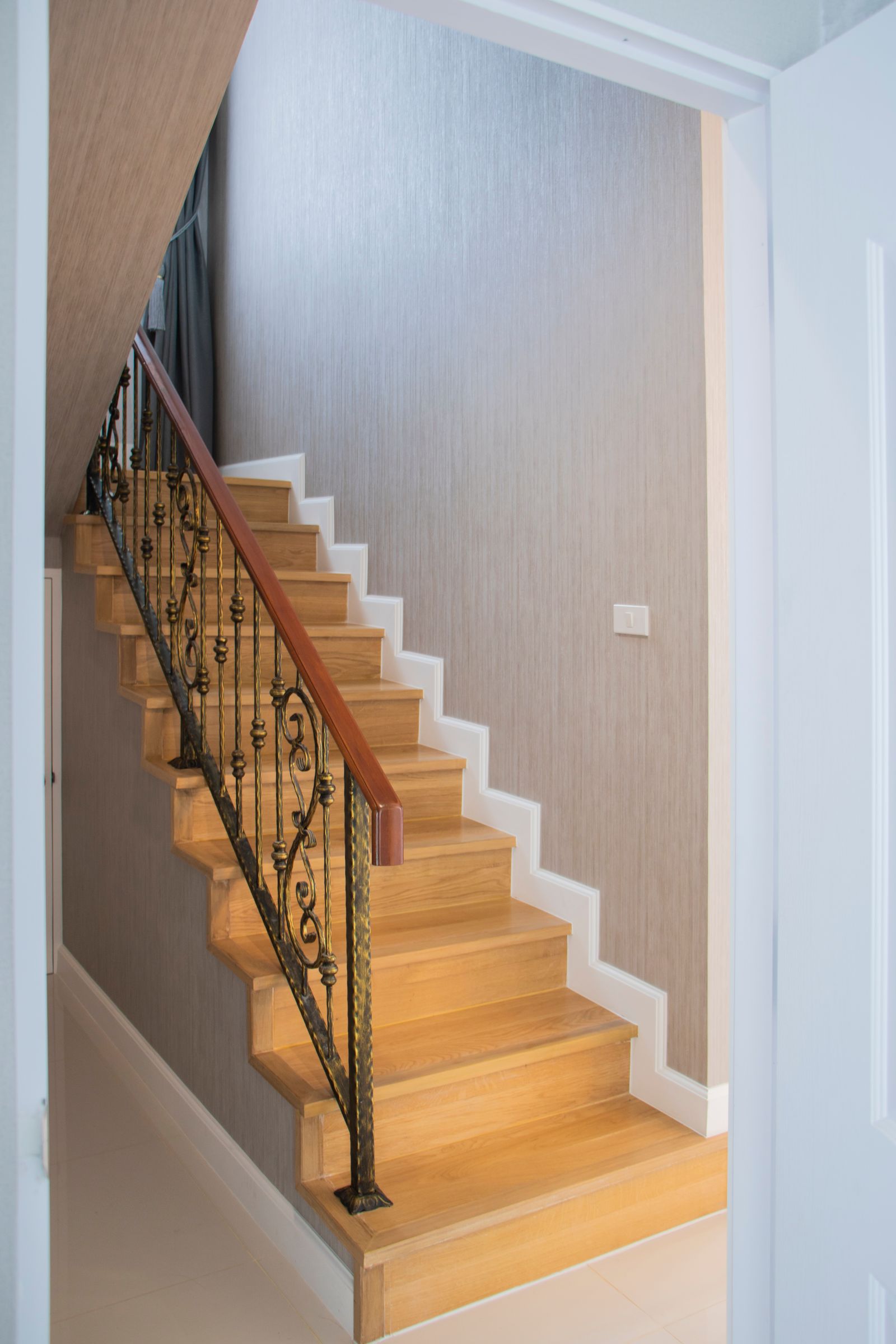
I'm Bettina Reid, and I hear this from women in Cloverdale all the time, usually said a little sheepishly, like they are confessing something. “I don't know why but the stairs are just a lot now.” They are not imagining it. Perimenopause and menopause bring real joint stiffness, achy knees, and lower energy for the kind of up and down movement a two or three story home asks of you every single day. Hormonal shifts affect the tissue around your joints, and that shows up in ordinary places first. The staircase you have climbed a thousand times without thinking suddenly asks something of you it didn't before.

I felt this myself. I have been in perimenopause for over sixteen years, and I know the moment when something that used to be easy quietly stops being easy. Nobody warns you. You just notice one day that laundry, or the spare bedroom upstairs, or the basement you barely go into anymore, all involve stairs you would rather not take. If you have read making housing decisions during perimenopause, you already know how many small daily frustrations get written off as just getting older when they are actually your body moving through a real season of change. The same pattern shows up with perimenopause brain fog and real estate decisions. Something that felt manageable stops feeling manageable, and it is easy to blame yourself instead of the house.

A few of my clients have told me some version of the same story. One woman started leaving a phone charger on every floor of her house because she could not face going upstairs one more time before bed. Another told me she stretches at the bottom of the stairs before she even attempts them in the morning. These are small adjustments, but they are also quiet signals. When you start rearranging your daily habits around your house instead of your house supporting your daily habits, it is worth paying attention.

I talk to a lot of women in Cloverdale who are living in the home they raised their kids in, usually with bedrooms upstairs and living space down, and they love the house but dread certain parts of the day. Laundry day. Bedtime, when you trek up and down checking on things one more time. Bringing groceries in from the garage. None of it is dramatic on its own. It adds up, the same way a hundred small frustrations add up to one big feeling that something needs to change.

If this sounds familiar, the real question is not whether you are being dramatic about a few stairs. The question is whether your Cloverdale home is still supporting the life you are actually living now, or whether this is what I call a layout problem vs. a life problem. Some women in this season want a true single level home. Others just want fewer stairs between where they sleep and where they spend their day. Both are valid answers. Neither one means giving something up, and for women who are also navigating the empty nest and what it does to your sense of home, a change in layout can feel like relief rather than loss.

This is exactly the kind of thing we walk through early in the Balance Method, before any talk of listings or timing. We just get honest about what is working in your Cloverdale home and what is not, stairs included. If your house has quietly become harder to live in and you are not sure whether that is a fix it problem or a move problem, that is worth a real conversation with Balance Real Estate Group, not a guess you sit with alone.

Read

Why Perimenopause Makes Big Decisions Feel Bigger Than They Are

Yes, perimenopause really can make an ordinary decision feel like a mountain, and a housing decision is one of the biggest a person faces in midlife. If you have stared at a simple choice, like whether to fix the kitchen or start looking at other homes, and felt strangely stuck, you are not imagining it and you are not losing your grip. Your body is going through real change, and that change touches the part of your brain that handles decisions, right when you are facing some of the biggest choices you will make about where you live.

I see this often with women in Cloverdale who tell me some version of the same thing. They say they used to be decisive. They booked flights without a second thought, picked schools, negotiated raises at work, and now they cannot decide whether to repaint a bedroom. That is not a character flaw. Perimenopause changes hormone levels that affect memory, focus, and how confident you feel in your own judgment. A decision that would have taken an hour five years ago can now take weeks, and that gap between who you used to be and who you are right now can feel discouraging all on its own, before you even get to the actual decision.

Some of this shows up in small, almost funny ways. You walk into a room and forget why. You read the same paragraph of a listing three times and still could not repeat it back. You start a conversation about moving and lose your train of thought halfway through the sentence. None of that means you are unfit to make a big decision. It means your brain is carrying more than usual right now, and it needs a little more patience from you than it used to.

What makes housing choices especially hard during this stretch is that they are rarely just about the house. They are tangled up with identity, with what this next chapter of your life is supposed to look like, and with a fear of getting it wrong in a way that is expensive and hard to undo. When your brain is already working overtime just to manage sleep, mood, and memory, adding a decision that big can feel like too much all at once. I wrote before about how it can be hard to tell whether a struggling home is a layout problem or a life problem, and that question gets even harder to answer when your own thinking feels foggy, which is exactly the territory I cover in perimenopause brain fog and real estate decisions.

The good news is the fog is not permanent, and it does not mean you have to make the decision alone or all in one sitting. One of the most useful things I tell clients going through this is to separate the timeline from the decision itself. You do not have to decide today whether to sell. You only have to decide whether it is worth learning more about your options first. That smaller question is usually much easier to answer, even on a foggy day, and it is really the same question behind knowing if it's time to start thinking about moving at all.

Sleep plays a bigger role in this than most people expect. If you are not sleeping well, and so many women in this stage are not, your ability to weigh a big decision drops even further. I have talked with clients in Cloverdale who did not connect their restless nights to how stuck they felt about their home until we talked it through together. Once sleep started to improve, even a little, decisions that felt impossible started to feel manageable again.

If a housing decision has been sitting on your shoulders for months, please know the size of it in your mind right now is not the true size of the decision. Your brain is working through more static than usual, and that static passes. You do not need to have it all figured out today. As Bettina Reid with Balance Real Estate Group, I have sat across the table from enough Cloverdale women in this exact spot to know the fog lifts, and when it does, the answer is usually clearer than it felt in the middle of it.

If any of this sounds familiar, the first step is not deciding to sell your home. It is just getting curious about where you actually stand, with no pressure attached. That is exactly what the Balance Method was built for, and it is a good place to start when your head feels too full to start anywhere else.

Read

I have sold a property at 18468 66a Avenue in Surrey

I have sold a property at 18468 66a Avenue in Surrey on Jul 30, 2026. See details here

Beautiful 4 bed, 4 bath 2,252 sqft family home w/GARAGE in heart of Cloverdale! Open-concept main floor features massive kitchen w/large island & tons of cabinet space flowing into dining area & spacious living room w/cozy gas fireplace - perfect for entertaining! Upstairs includes 3 spacious beds & 2 baths including large primary suite w/vaulted ceilings, huge walk-in closet & renovated ensuite. Basement offers large rec room, 4th bedroom, & 2 piece bath that can easily be converted into a full bath. Updates include new roof, furnace, hot water tank, laminate flooring in kitchen (2025), upstairs laminate (2020), & garage roof (2020). Enjoy a sunny south-facing backyard w/large deck, GARAGE + driveway for 2 car parking! Walking distance to schools, parks, shopping, & upcoming skytrain!

Read

New property listed in Cloverdale BC, Cloverdale

I have listed a new property at 18289 58a Avenue in Surrey. See details here

RANCHER on a quiet CUL-DE-SAC with an 8,830 SF LOT, the combination everyone wants & almost nobody finds. Over 1,600sf of easy 1-level living: separate living & dining rms, plus family rm open to the kitchen w/gas fireplace & garden views. Kitchen offers granite counters, gas stove, dbl farmhouse sink & plenty of cabinetry. Primary comfortably fits a king, w/walk in closet, & 4 pc ensuite updated w/soaker tub & oversized tiled shower. Updated main bath w/skylight. Hardwood floors, 2 gas fireplaces, laundry/mudroom leading to insulated & heated DOUBLE GARAGE. Then there's the backyard, a true garden oasis. Towering cedar hedges for privacy, mature Japanese maples, established perennial beds & expansive deck built for summer. Walk to schools, parks, transit & everything Cloverdale offers.

Read

New property listed in Abbotsford West, Abbotsford

I have listed a new property at 31 30930 Westridge Place in Abbotsford. See details here

Bright, Bristol Heights by Polygon in Abbotsford. 2 bed, 3 bath, just under 1,300 sq ft of living. Open concept main floor with soaring ceilings, abundant natural light, stainless steel appliances, chef-size island and generous living/dining space. Walk out backyard off main floor, ideal for year round entertaining and easy access to outdoor living. Upstairs features a primary suite with walk-in closet and spa like ensuite, a well-sized second bedroom and ample storage. Side by side double garage plus two additional spots on the parking pad. Residents enjoy Club West amenities (pool, fitness), extensive walking trails, family-friendly parks, excellent schools, transit and quick access to HWY 1 and major shopping. Perfect for families or downsizers seeking quality build.

Read

I have sold a property at 301 19645 64 Avenue in Langley

I have sold a property at 301 19645 64 Avenue in Langley on Jul 30, 2026. See details here

Priced to sell $44,000 below BC Assessment. Penthouse Suite with vaulted ceilings, abundant natural light, and a spacious layout rarely found in today's newer condos. Enjoy generous room sizes, a large laundry room, and a massive wrap-around balcony perfect for relaxing or entertaining. Oversized storage locker on the same floor offers approximately double the space of a typical locker. No neighbors above. Recent updates include brand-new carpeting and freshly painted bedrooms. Portable A/C unit included. Located one block from Willowbrook Mall and approximately a 7-minute walk to the future 196 Street SkyTrain Station. Situated within a Transit-Oriented Area (TOA) with minimum allowable density up to 8 storeys. Amenities include a clubhouse, exercise centre, and woodworking shop.

Read

What a Right-Sized Home in White Rock Actually Looks Like

A right-sized home in White Rock usually looks smaller on paper and much bigger in real life. It tends to have fewer rooms you never use, one level you can move through without stairs working against you, and windows that actually let in the ocean light White Rock is known for. It is not about shrinking your life down. It is about keeping only the parts of a home that still serve you and letting go of the parts that have just been sitting there, unused, for years.

I work with a lot of women in White Rock who are picturing this exact shift and cannot quite put words to it yet. They know the current home feels too big, too full of stairs, or too far from the parts of town they actually spend time in now. What they are picturing, without always naming it, is a right-sized home, which I have written about before in simple terms as what right-sizing actually means. In White Rock specifically, that usually points toward walkable streets near the water, single-level living or close to it, and less house to manage so there is more time and energy left for the life happening outside its walls.

White Rock has a particular pull for women in this stage of life. The waterfront, the walkability, the slower pace compared to some of the busier parts of the Lower Mainland, all of it appeals to someone who is done managing a big property and ready to actually enjoy where they live. I have noticed a pattern with clients here. They stay in a home that no longer fits for longer than they mean to, sometimes because the neighbourhood itself still feels right even when the house does not. I wrote about why so many women in this area stay too long, and White Rock is a place where that pattern shows up often, because the location is so easy to love even when the house underneath it has stopped working.

A right-sized White Rock home usually trades square footage for location and ease. That might mean a smaller lot closer to the water instead of a bigger yard further inland. It might mean one level instead of three so the stairs stop being a daily obstacle. It might mean a smaller kitchen that gets used every day instead of a large one that only gets used twice a year for company. None of that is a downgrade. It is choosing a home that matches how your actual days unfold instead of how they used to unfold fifteen or twenty years ago.

What I tell clients in White Rock is that the floor plan matters less than most people think, and the neighbourhood matters more. I wrote about this directly, why the neighbourhood matters more than the floor plan at this stage of life, because so many women get stuck comparing square footage between homes when the real question is whether the streets around the home support the life they want next. A slightly smaller home in a neighbourhood you can walk through every morning will usually serve you better than a bigger home you have to drive everywhere from.

If you are picturing a right-sized life in White Rock and not sure what that looks like on paper yet, that is a completely normal place to start from. You do not need a finished picture before you start asking questions. As Bettina Reid with Balance Real Estate Group, I have helped enough women in White Rock make this shift to know the right-sized home usually feels obvious once you actually see it, even if it did not feel obvious on paper beforehand.

If this sounds like where you are, the place to start is not touring homes. It is getting a clear picture of where you stand right now, which is exactly what the Balance Method walks you through, one honest step at a time.

Read

Should You Sell Before You Buy, or Buy Before You Sell?

There is no single right answer to this question, but for most homeowners in Cloverdale, Langley, and South Surrey, selling first is usually the steadier path, and buying first only makes sense when you already have a clear plan for the gap in between. The honest answer depends less on the market and more on how much uncertainty you can comfortably carry at once.

Selling first means you know exactly how much money you have to work with before you commit to a new place. You are not guessing at what your current home will fetch while also trying to close on another one. The tradeoff is that you might need somewhere to stay for a stretch between homes, whether that is a short term rental, a stay with family, or even renting your old home back for a few weeks if the new buyer agrees. It is less tidy on the calendar, but it protects you financially, and for a lot of the women I work with in Langley, that peace of mind is worth more than the inconvenience of an extra move.

Buying first feels more comfortable emotionally because you are not without a home in between, even for a short while. You find the next place, you move on your own schedule, and you sell the old home once you are already settled. The risk is carrying two properties at once, even briefly, and needing your current home to sell at the price and speed you are counting on. This can work well if you have enough home equity and what it makes possible to bridge the gap comfortably, but it is a harder path if your finances depend on the sale closing on time.

The question underneath this question is usually not about logistics at all. It is about how much you can tolerate not knowing. Some people would rather have one clean transaction and live with a temporary inconvenience. Others would rather have somewhere solid to land, even if it means carrying some financial uncertainty for a few weeks. Neither answer is wrong. I have watched clients in Cloverdale go both directions and land just fine, because they picked the path that matched their own tolerance for uncertainty instead of copying what a friend or a sibling did.

Where people get stuck is not usually the decision itself. It is not knowing enough about their own numbers to make it confidently. I have seen women sit in this exact spot, feeling stuck even when they technically have options, simply because nobody has walked them through what selling first or buying first would actually look like with their specific home and their specific finances. Once those numbers are on the table, the choice usually becomes much clearer on its own.

If you are trying to figure out which path fits you, the first step is not touring new listings or getting your current home appraised. It is understanding where you actually stand financially and emotionally, before you decide anything else. As Bettina Reid with Balance Real Estate Group, I walk clients through both scenarios with their real numbers before they commit to either one, because the right answer is different for every household.

If you are somewhere in the middle of this question right now, that is a completely normal place to be. The Balance Method was built exactly for this kind of in-between moment, when you know a move is coming but have not worked out the order of operations yet.

Read
Categories:   Abbotsford East, Abbotsford Real Estate | Abbotsford West, Abbotsford Real Estate | Aberdeen, Abbotsford Real Estate | Adult children moving home | After the sale | Albion, Maple Ridge Real Estate | Aldergrove Langley, Langley Real Estate | All Markets | Annieville, N. Delta Real Estate | Balance Method | Balance Real Estate Group | Bear Creek Green Timbers, Surrey Real Estate | Bolivar Heights, North Surrey Real Estate | Brain Fog | Brentwood Park, Burnaby North Real Estate | Brookswood Langley, Langley Real Estate | Burke Mountain, Coquitlam Real Estate | Buying and selling | Buying process | Central Abbotsford, Abbotsford Real Estate | Chilliwack Downtown, Chilliwack Real Estate | Chilliwack W Young-Well, Chilliwack Real Estate | Choosing a Realtor | Clayton, Cloverdale Real Estate | Client experience | Client relationships | Client stories | Cloverdale | Cloverdale BC, Cloverdale Real Estate | Cloverdale BC, Surrey Real Estate | Cloverdale Real Estate | Cloverdale, Surrey Real Estate | Coquitlam West, Coquitlam Real Estate | Cottonwood MR, Maple Ridge Real Estate | Crescent Bch Ocean Pk., South Surrey White Rock Real Estate | Decision Clarity | Decision-making | Downsizing | Downtown VW, Vancouver West Real Estate | Eagle Ridge CQ, Coquitlam Real Estate | East Central, Maple Ridge Real Estate | East Newton, Surrey Real Estate | Emotional Load | Emotional side | Emotional Transitions | Empty Nest | Fleetwood Tynehead, Surrey Real Estate | Fort Langley, Langley Real Estate | Garrison Crossing, Sardis Real Estate | Gen X homeowners | GlenBrooke North, New Westminster Real Estate | Grandview Surrey, South Surrey White Rock Real Estate | Greendale, Sardis Real Estate | Growing Families | Growing families Langley Cloverdale | Guildford, North Surrey Real Estate | Hatzic, Mission Real Estate | Hawthorne, Ladner Real Estate | Hemlock, Mission Real Estate | Home as identity | Home Buying Advice | Home Buying Women 50s | Home Equity Real Estate | Home Planning | Home Preparation | Home Pricing | Home Selling Advice | home selling process | Home Selling Strategy | Housing Decisions Women | King George Corridor, South Surrey White Rock Real Estate | Langley | Langley City, Langley Real Estate | Langley Real Estate | Life Transitions | Mary Hill, Port Coquitlam Real Estate | Menopause + Home | midlife home buying | Midlife home decisions | Midlife housing decisions | midlife moves | Midlife Real Estate | Midlife transitions | Mission BC, Mission Real Estate | Morgan Creek, South Surrey White Rock Real Estate | Moving descisions couples | Multigenerational Homes Langley | Multigenerational Living | Murrayville, Langley Real Estate | Neighbourhood fit midlife | New construction | Nordel, N. Delta Real Estate | North Coquitlam, Coquitlam Real Estate | North Meadows PI, Pitt Meadows Real Estate | Otter District, Langley Real Estate | Pebble Hill, Tsawwassen Real Estate | Perimenopause | Perimenopause Housing Decisions | Planning a Move | Poplar, Abbotsford Real Estate | Port Moody Centre, Port Moody Real Estate | Pre-listing prep | Pre-Sale Home Prep South Surrey | Promontory, Sardis Real Estate | Quay, New Westminster Real Estate | Queen Mary Park Surrey, Surrey Real Estate | Queensbury, North Vancouver Real Estate | Real Estate Cloverdale | Real Estate Langley | Renfrew VE, Vancouver East Real Estate | Right-Sizing | Right-Sizing Cloverdale | Right-Sizing Langley | Salmon River, Langley Real Estate | Sardis South, Sardis Real Estate | Sardis West Vedder Rd, Sardis Real Estate | Seller Tips | Selling a home | Selling a Home Cloverdale | Selling a home Langley | Selling Your Home | South Surrey | South Surrey Real Estate | South Surrey White Rock | South Surrey White Rock Real Estate | Southwest Maple Ridge, Maple Ridge Real Estate | Space Decisions | Starting over | Steveston South, Richmond Real Estate | Sullivan Heights, Burnaby North Real Estate | Sullivan Station, Surrey Real Estate | Sunnyside Park Surrey, South Surrey White Rock Real Estate | Sunshine Hills Woods, N. Delta Real Estate | Team | The Crest, Burnaby East Real Estate | Trust | Upper Eagle Ridge, Coquitlam Real Estate | Vedder Crossing, Sardis Real Estate | Walnut Grove, Langley Real Estate | West Newton, Surrey Real Estate | Whalley, North Surrey Real Estate | White Rock | White Rock homes | White Rock Real Estate | White Rock, South Surrey White Rock Real Estate | Willoughby Heights, Langley Real Estate | Women 40s & 50s | Women 50s | Women and housing | Women in Midlife | Working with a team
Reciprocity Logo The data relating to real estate on this website comes in part from the MLS® Reciprocity program of either the Greater Vancouver REALTORS® (GVR), the Fraser Valley Real Estate Board (FVREB) or the Chilliwack and District Real Estate Board (CADREB). Real estate listings held by participating real estate firms are marked with the MLS® logo and detailed information about the listing includes the name of the listing agent. This representation is based in whole or part on data generated by either the GVR, the FVREB or the CADREB which assumes no responsibility for its accuracy. The materials contained on this page may not be reproduced without the express written consent of either the GVR, the FVREB or the CADREB.